Positive Behaviour Support

Practical support, built around the person.

We take time to understand what behaviour may be communicating, then turn that understanding into strategies that work in everyday life.

Assessment, planning and coaching are shaped around the participant’s goals, rights, communication and the environments where support happens.

Listen firstPlan togetherKeep it useful
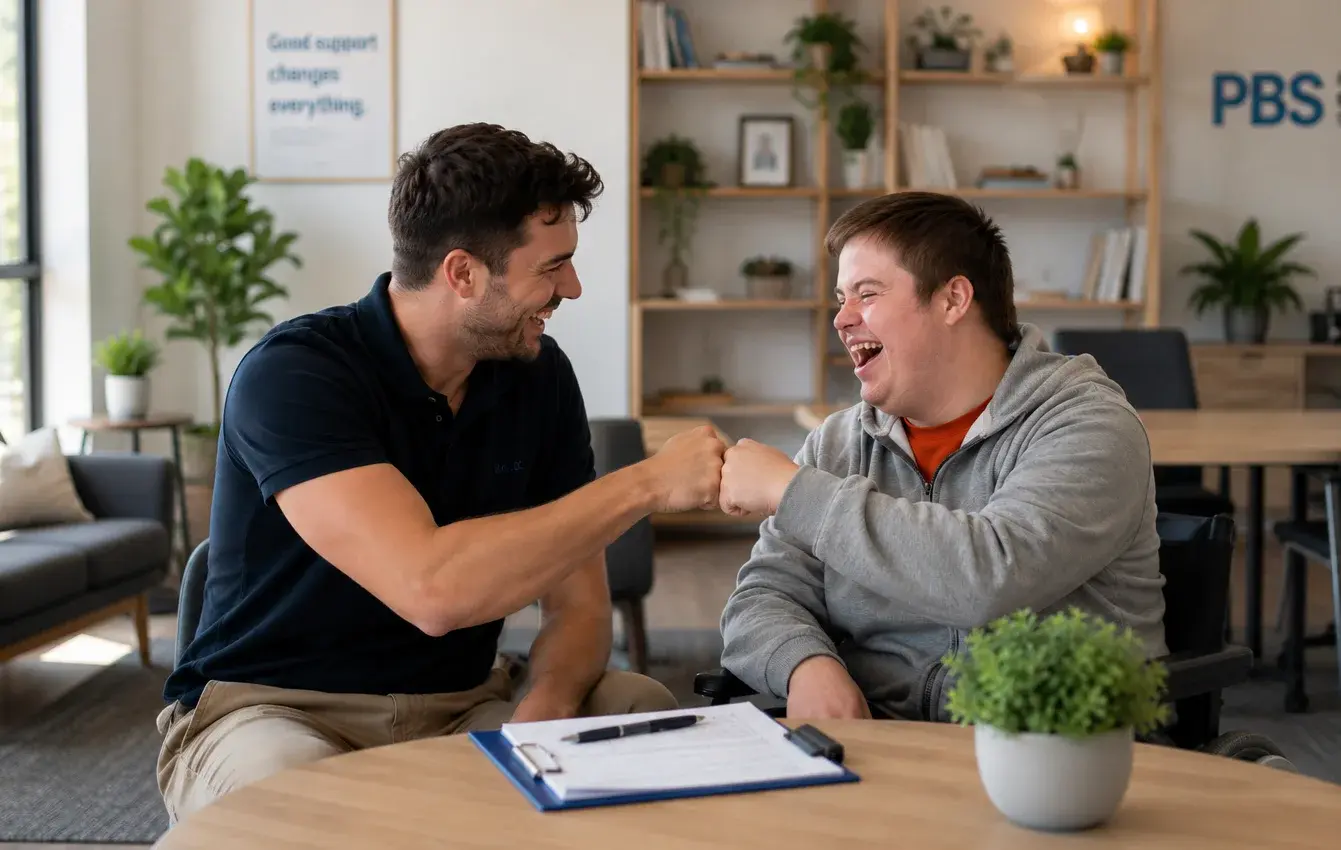
A participant and support practitioner sharing a fist bump
Support shaped with the participant and the people around them.

How we work

Start with strengths, needs and goals.

A practitioner completes assessment and develops a plan with the participant and the people who know them best.

Strategies people can use

  • Preventative strategies that reduce triggers
  • Skills that give the person safer ways to meet needs
  • Positive reinforcement and meaningful choice
  • Environmental changes that support success
  • Coaching so the whole team can work consistently

Who can benefit

Support across ages, settings and communication styles.

Participants

Children aged four and over, adolescents, adults and older people, including people with autism, intellectual disability, acquired brain injury, developmental delay or cognitive change.

Ask about participant support

Families and carers

Practical coaching for emotional regulation, communication, routines, community access, safety and behaviours of concern.

Talk through your situation

Schools and support teams

Collaborative planning, implementation training and review across school, supported accommodation, home and community environments.

Discuss support for your team
A smiling child making a peace sign outdoors
Support starts with the person, their strengths and what matters to them.

Our process

Clear steps, with the participant at the centre.

The detail and pace vary by person, but the work follows a clear cycle from understanding through to review.

01

Referral and initial contact

We learn about needs, goals, location, funding and the people involved.

02

Assessment

A Functional Behaviour Assessment helps identify what the behaviour communicates and what influences it.

03

Behaviour Support Planning

We develop an individualised plan with proactive, skill-building and response strategies.

04

Implementation and training

The participant, family and support team receive practical coaching to use the plan confidently.

05

Monitoring and review

We review information, outcomes and changing circumstances, then refine the plan.

Reducing restrictive practices

Dignity, autonomy and the least restrictive option.

Restrictive practices must only be used when necessary and with the required safeguards. We work to minimise and remove them by building safer, effective alternatives that respect the person’s rights.

Plans are person-centred, strengths-based, collaborative and grounded in evidence, never punishment, threats or denial.

Frequently asked questions

Questions we hear often.

How do I get started?

Fill out our online referral form or contact our intake team. We’ll guide you through the process and match you with a suitable practitioner based on your needs, location and current availability.

Are you a registered NDIS provider?

Yes. PBSG is registered to deliver behaviour support services and can work with agency-managed, plan-managed and self-managed participants.

What does a Behaviour Support Practitioner do?

Skilled PBS practitioners assess what may be driving behaviour, work directly with participants through 1:1 therapy, develop personalised plans, and coach and support families and teams in person to use strategies consistently.

Will the practitioner meet directly with the participant?

Yes. Direct 1:1 therapy with the participant is a core part of our service and is delivered by skilled PBS practitioners wherever practical. We also provide in-person coaching and support for families, carers, educators and support workers so strategies carry into everyday life.

What ages do you support?

We support people aged four and over, from early childhood through adulthood and older age. Strategies are adapted to the person’s developmental stage, communication and goals.

When should a child start behaviour support?

Children as young as four can benefit from positive strategies that build communication, reduce frustration and support emotional development. You do not need to wait for a situation to reach crisis point before asking for help.

What behaviours or goals can you help with?

We can help with aggression or self-injury, meltdowns, absconding, school refusal, communication difficulties, PICA, routines and transitions, and social or emotional skill development. Support is always tailored to the individual.

Where are sessions held?

Sessions can take place at home, school, work or in the community, wherever the behaviour and the person’s goals are best understood. Telehealth may also be used when appropriate.

Do you offer school-based behaviour support?

Yes. We collaborate with educators and school staff to support behaviour, learning and inclusion, and can contribute to plans used across the school environment.

Can you train support workers or SIL staff?

Yes. We provide in-person coaching and structured training for support workers and SIL teams as one part of implementation, alongside direct 1:1 therapy delivered with the participant by a skilled PBS practitioner.

Are sessions hard for participants?

Sessions are designed to be engaging, respectful and strengths-based. Practitioners adapt the approach to the participant’s preferences, communication and abilities.

Do you use punishment or denial-based approaches?

No. PBSG does not use punishment, threats or withholding access as behaviour strategies. Our approach is grounded in positive reinforcement, dignity, human rights and the NDIS Behaviour Support Capability Framework.

What qualifications do practitioners hold?

Our practitioners come from backgrounds including psychology, social work, occupational therapy, education and applied behaviour analysis. They meet NDIS Commission requirements and receive ongoing supervision and development.

How long is the wait to see someone?

Wait times vary by suburb, the support required and practitioner fit. Call our intake team or send an enquiry so we can discuss current availability in your area.

What if the practitioner is not the right fit?

Relationships matter. If the match is not working, tell us and we will work with you to find someone better suited to the participant’s needs and communication style.

Can I access services without an NDIS plan?

Private clients may be able to access services. Contact us to discuss current availability, fees and whether the service is suitable.

What NDIS funding can be used?

Behaviour support is commonly funded through Improved Relationships for Specialist Behaviour Support, and some related work may use Capacity Building: Improved Daily Living. Your plan and circumstances determine what can be claimed.

Can you help with funding requests or plan reviews?

Where clinically appropriate, practitioners can provide reports, letters and evidence about the participant’s needs and progress for plan reassessments or funding discussions.

How do I approve PBSG under PACE?

Call the NDIS on 1800 800 110 and ask to endorse MB Positive Behaviour Support Pty Ltd, trading as The Positive Behaviour Support Group, for Behaviour Support. Our NDIS registration number is 4053368702 and ABN is 57 684 771 257. Ask for the endorsement to align with the start date of the new plan.